
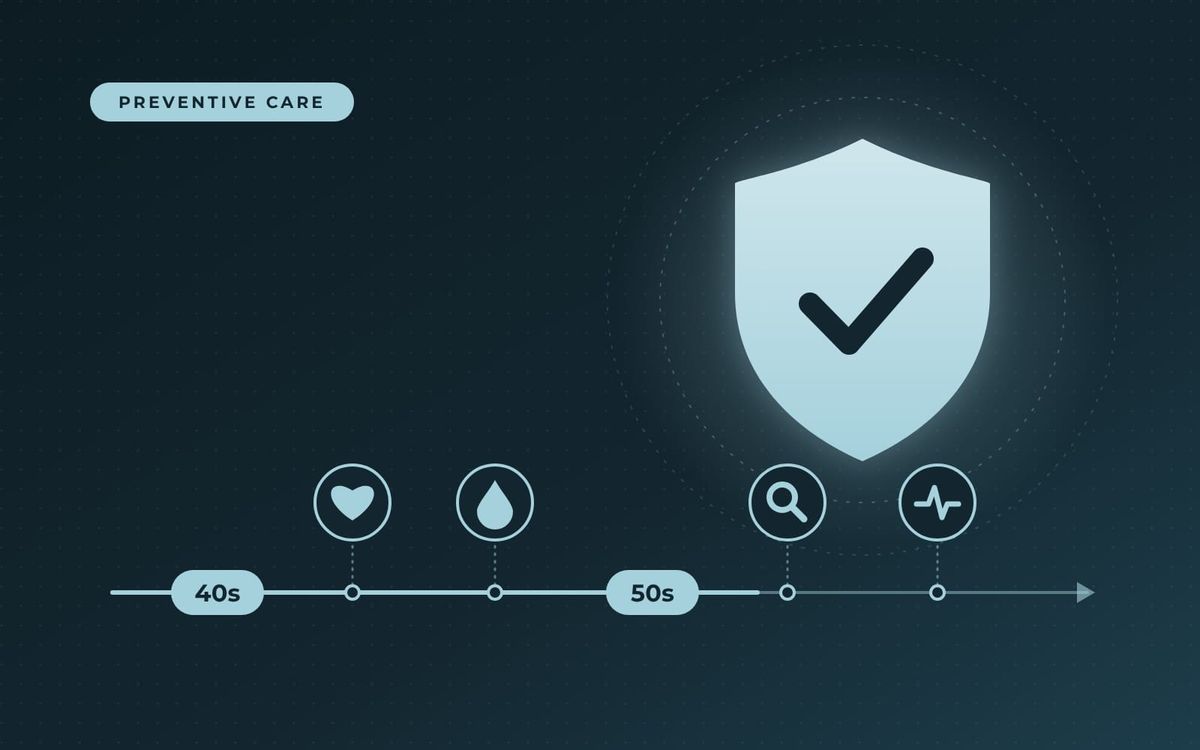
Midlife can be a useful time to take stock of health. This does not mean that everyone needs a long list of tests. It means considering personal risk, choosing checks that are likely to help, and making room for prevention in everyday life.
Begin with a picture of your own health
Two people aged 48 may need quite different conversations. One has a parent who developed heart disease young; the other had diabetes during pregnancy. Their family histories, previous illnesses, medicines, work patterns and priorities all shape which preventive measures deserve attention.
Screening means looking for signs of a condition in someone who has no relevant symptoms. It is different from investigating a new symptom. A reassuring screening result should not delay assessment of persistent bleeding, unexplained weight loss, chest discomfort or another new concern. Screening programmes also need evidence that their benefits outweigh potential harms. 1
Blood pressure, cholesterol and blood glucose
High blood pressure, abnormal cholesterol and raised blood glucose may develop without noticeable symptoms. Understanding these measures together can help a clinician assess the likelihood of future cardiovascular disease or type 2 diabetes. Body weight, waist measurements, smoking and physical activity provide additional context.
Malaysia’s 2023 dyslipidaemia guideline advocates a complete lipid profile for adults over 30, alongside assessment of other cardiovascular risk factors. It also recognises that some people with inherited or other high-risk conditions may need earlier attention. A single cholesterol result does not tell the whole story; the important question is how it changes the person’s overall risk and care plan. 2
Malaysia’s diabetes guideline supports testing for type 2 diabetes or prediabetes in asymptomatic people with relevant risk factors, and recommends screening from age 30 even without those factors. Tests may include fasting glucose or HbA1c, a measure reflecting average glucose over recent months. Testing intervals and follow-up should reflect the result and clinical circumstances. 3
Which cancer screenings are worth discussing?
Cancer screening depends on the condition, age, personal history and, sometimes, sex or anatomy. In Malaysia, established pathways include cervical screening using HPV testing or cytology, breast assessment and mammography, and colorectal screening. A person who has already been screened may not need another test immediately. 4
For adults at average risk, Malaysia’s colorectal guideline recommends screening from age 50 to 75, commonly using an immunochemical stool test that looks for small amounts of blood. A positive result needs further assessment, usually colonoscopy. A strong family history may call for a different approach or earlier testing. 5
Breast-screening discussions also depend on risk and age. For some women, family history or prior findings may change when mammography is appropriate. Decisions should follow current local guidance rather than treating the same package as suitable for everyone. 6
Prevention is broader than a laboratory report
Vaccinations remain relevant throughout adulthood. Depending on past vaccinations, health conditions, work and travel, a clinician may recommend protection against infections such as influenza or hepatitis B. Malaysia’s adult immunisation guidance provides a local basis for these conversations. 7
Sleep, smoking, alcohol use, emotional wellbeing, nutrition and movement also deserve attention. The World Health Organization recommends adults accumulate at least 150 to 300 minutes of moderate physical activity each week, together with muscle-strengthening activity on two or more days. These are population recommendations, and gradual progress tailored to ability is often more realistic than an abrupt lifestyle overhaul. 8
A useful review may therefore lead to a conversation about a smoking-cessation service, managing stress, sleep difficulties or finding an enjoyable activity, rather than another blood test.
Why more testing does not always mean better prevention
Extensive screening packages can appear reassuring, yet an additional test may produce an unclear result, unnecessary anxiety or investigations that carry their own risks. A false positive suggests a problem that is not present; overdiagnosis identifies a condition that would not have caused harm during the person’s lifetime. Screening should be judged by the complete pathway from test to diagnosis, treatment and meaningful outcome. 1
Before choosing an extra biomarker, scan or screening panel, it can help to ask what the test is intended to detect, whether it is recommended for someone with this risk profile, and what would happen after an abnormal result. For example, Malaysia’s colorectal guidance does not recommend the tumour marker CEA as a general screening test. 5
Turn the review into a plan that can be followed
A practical outcome is a short, shared plan: which risks need attention now, which tests are due later, who will explain the results and what support is available if a change is needed. A test that leads nowhere offers limited reassurance or benefit.
Access also matters. Malaysia’s PeKa B40 programme offers eligible Sumbangan Tunai Rahmah recipients and their spouses aged 40 and above a health-screening pathway, including a follow-up visit to review results. The eligibility criteria are specific; the programme is not a universal entitlement for every adult over 40. 9
For readers assessing preventive-health services, an informative question is whether a programme helps people understand their risk and complete appropriate follow-up, rather than simply counting the number of tests sold. At midlife, prevention is most useful when it remains proportionate, personal and achievable.
For general education. Screening recommendations and service eligibility vary with personal risk and local guidance. This article does not replace individual medical assessment.
References
1. UK National Screening Committee. Screening in healthcare: effectiveness. Updated 11 July 2025. Accessed 14 November 2026. View source
2. Ministry of Health Malaysia and partner professional bodies. Clinical Practice Guidelines: Management of Dyslipidaemia. 6th ed. 2023. Accessed 14 November 2026. View source
3. Ministry of Health Malaysia. Clinical Practice Guidelines: Management of Type 2 Diabetes Mellitus. 6th ed. 2020. Accessed 14 November 2026. View source
4. Ministry of Health Malaysia. Guidelines for Cervical Cancer Screening in Malaysia. 2nd ed. 2023. Portal last updated February 2026. Accessed 14 November 2026. View source
5. Ministry of Health Malaysia and partner professional societies. Clinical Practice Guidelines: Management of Colorectal Carcinoma. 2017. Hosted by the Malaysian Society of Colorectal Surgeons. Accessed 14 November 2026. View source
6. Government of Malaysia. Cancers related to women: breast and cervical cancer screening. Updated 13 March 2026. Accessed 14 November 2026. View source
7. Malaysian Society of Infectious Diseases and Chemotherapy. Guidelines for Adult Immunisation. 4th ed. 2026. Accessed 14 November 2026. View source
8. World Health Organization Regional Office for Europe. Physical activity fact sheet: adult recommendations. Accessed 14 November 2026. View source
9. Government of Malaysia. PeKa B40: eligibility, screening and follow-up benefits. Updated 16 March 2026. Accessed 14 November 2026. View source